Historic Home Guide
Rodent Control in Historic Waco Homes: What Works on Century-Old Construction
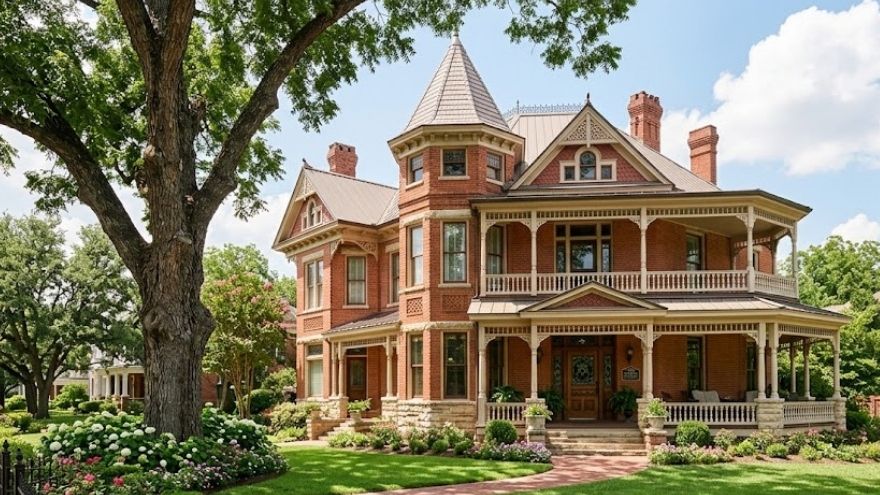
Rodent control in a 1920s Austin Avenue home is categorically different from the same work in a 2005 Woodway slab house. The entry-point inventory is larger and more complex, the materials that are appropriate to use are more constrained, and the sequencing errors that create the worst problems — sealing with the wrong material, sealing before treatment is complete — are harder to recover from in historic wall construction than in modern drywall. Here's what actually works.
Why Historic Construction Is More Complex
Pre-1960 Waco residential construction — brick-veneer masonry on the Avenue, Craftsman frame in Sanger Heights and Oakwood, Tudor-revival cottages throughout the historic corridors — has rodent entry-point characteristics that newer construction simply doesn't have: The Waco Historic Landmarks Preservation Commission has documented over 400 properties in the Austin Avenue and Sanger Heights historic districts, with the majority of contributing structures dating to 1900–1945 — a construction window that predates modern gap-sealing standards, vapor barriers, and synthetic exclusion materials by decades.
Accumulated Renovation History
A 1925 Austin Avenue home that's had two kitchen additions, three electrical updates, a mid-century bathroom expansion, and two HVAC system replacements has accumulated utility penetrations from each renovation — many of which were never sealed at the exterior wall. The most consistent finding on historic home inspections is a utility run dating from 1968 or 1982 with a 1-inch gap around the conduit bundle, invisible from inside and perfectly accessible from the exterior to a mouse looking for winter shelter. Modern construction has fewer of these because there are fewer renovation cycles to accumulate them.
Masonry Construction Complexity
Brick-veneer over wood-frame construction — the dominant type in Waco's Austin Avenue and Downtown historic residential — has entry-point types that are foreign to slab-on-grade homes. Weep holes in every course of brick veneer are intentional drainage gaps that must remain open but create entry points if not screened. Mortar-joint deterioration from a century of thermal cycling and McLennan County's shrink-swell clay soils creates gaps in the masonry that rodents exploit — and that require mason-quality repointing to address correctly, not caulk patches with inappropriate sealant.
Original Plaster Wall Construction
Pre-war Waco homes have plaster-over-lath wall construction rather than modern drywall. When rodent control requires accessing a wall cavity — for dead-rodent extraction, nest removal, or exclusion verification — accessing and repairing plaster walls is significantly more disruptive and expensive than equivalent drywall access. This changes the treatment sequencing calculus: in a modern home, a strategic wall access cut is a relatively minor intervention; in a historic plaster home, it's a preservation-quality repair job. Treatment protocols that avoid wall-cavity access — specifically, snap-trap treatment rather than bait, and careful exclusion sequencing to avoid entrapment — are more important in historic homes precisely because the cost of getting it wrong is higher.
The Right Treatment Protocol for Historic Homes
Snap Traps Over Bait — Always
Rodenticide bait should not be the primary treatment method in a historic Waco home. The reason is simple: baited rodents die wherever they retreat — in wall cavities, in plaster ceiling voids, in sub-floor spaces inaccessible without destructive access. In a modern home with drywall, locating and accessing a wall-cavity carcass is a minor disruption. In a historic home with plaster-over-lath walls, plaster ceilings, and original hardwood floors, that same dead-rodent odor problem requires either enduring weeks of smell or making an access cut that requires a plasterer to repair.
Snap traps on confirmed runways in the attic — where roof rats travel — allow carcass retrieval from an accessible location. Snap traps in the crawl space on confirmed Norway rat runways do the same. We deploy snap traps only, positioned on the runways that the evidence identifies, checked on 5–7 day cycles. Treatment is complete when two consecutive visits show zero catches and no fresh evidence.
Treatment Completion Before Exclusion — Critical in Plaster Construction
The standard rule — treat first, exclude after activity resolves — is more critical in historic homes than anywhere else. Sealing a plaster-construction home while rodents are active inside creates an entrapment situation where the dead rodent will be in a plaster wall or ceiling void. The odor will require either sustained tolerance for weeks or a plaster repair that may not match the original finish quality. We confirm activity resolution through two consecutive clean visit cycles before sealing a single entry point in historic construction. This adds time — treatment programs run 2–4 weeks before exclusion begins — but it prevents the far more expensive and disruptive alternative.
Exclusion Materials Appropriate for Historic Properties
Weep Holes: Screen, Don't Fill
Weep holes must remain open — they're structural drainage points, not optional features. The correct treatment is 1/4-inch galvanized hardware cloth cut to fit over each opening and secured with exterior construction adhesive. We match the color of the adhesive to the mortar joint as closely as possible. We don't fill weep holes with mortar, hydraulic cement, or caulk — any of those approaches blocks the drainage function and potentially creates moisture problems in the wall cavity that are worse than the rodent access.
Gable Vents: Hardware Cloth Behind, Not Replacement
Original louvered gable vents on historic homes should not be replaced with modern plastic inserts. The louver style, materials, and proportions are character-defining features of the original construction. The correct approach is 1/4-inch galvanized hardware cloth installed behind the existing louvers — visible from the inside of the attic as a screen backing, invisible from outside. This maintains the original visual character of the vent while providing the rodent exclusion the unscreened vent lacked.
Mortar Joint Gaps: Mason Referral, Not Caulk
Rodent gaps in historic masonry mortar joints — gaps wider than 1/4 inch that are at accessible entry-point locations — require proper repointing with mortar that matches the original in composition, color, and profile. Filling historic masonry mortar joints with inappropriate caulk is a preservation problem that can affect a property's historic designation and creates maintenance issues. We flag mortar joint gaps, document their location and size, and refer to a mason for repointing. We don't address historic masonry joints with caulk regardless of how that simplifies the exclusion scope.
Soffit and Fascia Gaps: Steel Flashing and Color-Matched Caulk
Where wood fascia has pulled away or rotted at the eave line — common in historic homes where gutter water pooling has damaged original wood — we use steel flashing or weatherproof exterior caulk in color-matched or clear formulation. We don't use white spray foam on painted historic wood surfaces; the visual disruption is incompatible with the character of historic properties, and the foam will fail before the next inspection cycle anyway in Texas heat.
Limits of Historic Home Exclusion — Honesty Matters
Full exclusion — achieving the near-zero entry-point standard we can reach on a 2005 slab home — is often not achievable in a historic home without interventions that would damage original fabric. In these cases, we prioritize:
- High-risk gaps: confirmed active entry points, locations with prior gnaw evidence, foundation-level openings in pier-and-beam sections
- Medium-risk gaps: theoretical entry points at accessible above-grade locations that current evidence doesn't confirm as actively used
- Low-risk monitoring: theoretical entry points at locations where closing them would require irreversible alteration to character-defining features
A realistic goal for most Austin Avenue and Sanger Heights historic homes is reducing intrusion frequency and severity rather than achieving permanent exclusion at the level possible on newer construction. The high-risk gaps get closed; the medium-risk gaps get addressed where materials and methods allow; the low-risk locations get monitored. This is an honest scope, and it produces meaningfully better outcomes than ignoring the problem while also being realistic about what century-old construction allows.
The Canopy Problem — Our Honest Take on Trees
Austin Avenue pecan trees are magnificent. They're also the primary roof rat access pathway to every roofline within branch-contact range. We can close every gable vent, every soffit gap, and every plumbing stack penetration on an Austin Avenue property — and if a pecan branch still touches the roofline, motivated roof rats during harvest season will eventually find whatever entry point thermal cycling opens in the next year's exclusion work.
Canopy cutback doesn't eliminate the roof rat population; it removes their direct roofline access pathway and makes exclusion more durable. We document which branches contact or overhang rooflines and provide that documentation for arborist referral. Pruning historic pecan trees is preservation-quality arborist work, not a pest control company scope. But the documentation we produce gives the arborist the specific information needed to address the access pathway efficiently.
Related Resources
- Historic Home Rodent Control Service
- Roof Rat Removal
- Attic Rodent Proofing
- Rodent Exclusion Services
- Austin Avenue Rodent Control
- Sanger Heights Rodent Control
Heritage-Sensitive Exclusion — Free Inspection — Call (254) 343-1352
Free inspection. Same-day for most McLennan County calls before noon. Licensed and insured.
Call (254) 343-1352