Exclusion Guide
Rodent-Proofing Materials That Actually Work — and What Fails in Texas Heat
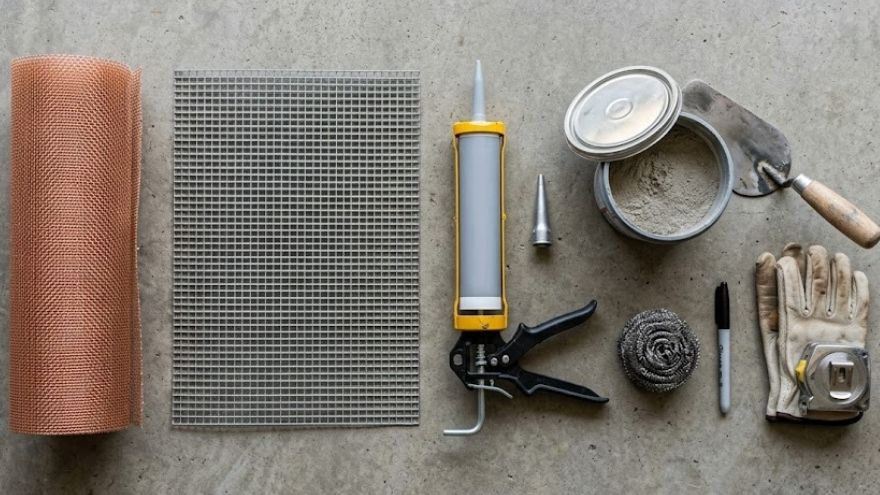
The most common reason rodent exclusion fails in Waco is material selection. Expanding foam alone is the single most widely misused exclusion material in Central Texas — it's not gnaw-resistant and it fails in 2–4 years in Texas heat. Here's what actually works, what fails, and why the Texas climate makes material selection more consequential than it is in other markets.
Why Texas Climate Makes Material Selection Critical
Rodent exclusion materials that perform adequately in northern climates often fail significantly faster in central Texas. Two environmental factors drive this:
Heat: Waco attic temperatures regularly exceed 130–150°F in July and August. Materials rated for "outdoor use" at 90°F experience dramatically accelerated degradation at sustained 140°F. Plastic vent inserts rated for 15-year service life in Minnesota may have 8–10 functional years in a south-facing Waco attic. UV exposure at the roofline compounds this — south-facing and west-facing gable vents receive direct UV loading that makes plastic brittle along screen perimeters before the frame fails.
Humidity cycling: McLennan County's humid subtropical climate produces significant seasonal humidity variation — dry winters, wet springs and summers. This shrink-swell cycling causes standard silicone caulk at exterior gaps to crack and pull away within 1–3 seasons. A caulk seal applied in February may be open by the following October.
Materials That Work
Copper Mesh — Best for Irregular Gaps and Utility Penetrations
Copper mesh stuffed into gaps before a primary sealant application is the most versatile gnaw-resistant material for residential exclusion. Rats cannot gnaw through it; mice cannot push through properly installed mesh. It conforms to irregular cavity shapes — around pipe bundles, inside utility chases, behind vent openings — that rigid materials can't address. It doesn't rust in Waco's humidity cycles the way standard galvanized steel does. And it's permanent in the sense that it doesn't degrade in Texas UV or heat exposure the way foam or plastic does.
The correct installation method: pack copper mesh firmly into the gap, leaving no voids, then apply polyurethane caulk over the face of the mesh to create an integrated seal. The mesh does the gnaw-resistance work; the caulk fills the surface voids. Never use copper mesh alone without a sealant face — it's not a complete seal without the caulk layer. And never use caulk alone without mesh backing on any gap that has prior gnaw evidence — the caulk provides no gnaw resistance and will be reopened within days.
1/4-Inch Galvanized Hardware Cloth — Best for Vent Openings
Galvanized steel hardware cloth cut and fastened over vent openings — crawl space vents, attic gable vents, static roof vents — is the standard for any opening large enough to require structural coverage rather than gap fill. At 1/4-inch mesh size, it blocks both rats (which need at least 3/8 inch to squeeze through) and mice (which need at least 1/4 inch). It maintains full airflow through the vent, which is why you screen vents rather than close them.
Installation matters: fastened with exterior-grade screws, not staples. Staples pull out under sustained pressure from determined rats within months; screws hold for the life of the installation. For crawl-space vent applications in Brazos-corridor and lake-adjacent properties with sustained ground moisture, specify hot-dip galvanized or stainless mesh — standard galvanized corrodes through in 8–12 years in high-humidity crawl environments, a failure that is invisible from outside until an animal pushes through.
Hydraulic Cement — Best for Foundation Cracks and Sub-Grade Gaps
Hydraulic cement is the correct material for foundation cracks, below-grade utility penetrations, and any gap that contacts soil or sustained moisture. It expands slightly as it cures, filling voids completely. It cannot be gnawed. It handles the shrink-swell movement of Waco's clay soils better than standard Portland cement — the slightly flexible cure accommodates some movement without re-cracking.
For foundation cracks larger than 1/4 inch, we use copper mesh as a backer before applying hydraulic cement. The mesh provides gnaw resistance while the cement provides the structural fill. For cracks narrower than 1/4 inch at grade, hydraulic cement alone is sufficient — mice cannot squeeze through a 1/4-inch crack, only gaps larger than that.
Polyurethane Caulk — Best for Small Above-Grade Gaps
Paintable polyurethane caulk outperforms standard silicone caulk for exterior rodent exclusion applications in Waco's climate for one reason: flexibility under thermal cycling. Polyurethane caulk maintains adhesion and flexibility through temperature swings from winter lows to summer 100°F+ heat that cause standard silicone to crack and pull at the bond line. It adheres to masonry, wood, and metal. It's paintable — important for historic properties where color matching matters.
Use polyurethane caulk as the primary material for gaps under 1/4 inch at above-grade locations without prior gnaw evidence. Use it as the face sealant over copper mesh for any gap with prior gnaw evidence. Do not use standard silicone caulk for exterior rodent exclusion; it fails too fast in Waco's conditions to be a worthwhile investment.
Steel Flashing — Best for Gnaw-Active Roofline Points
Sheet metal folded and fastened over gnaw-prone wood at eave lines, door frames, and roof-deck junctions is the correct material where roof rats have established active gnaw sites along the roofline. Rats cannot gnaw through steel. The flashing is cut to fit the specific geometry of the gnaw site and fastened with exterior screws into structural framing behind the surface material. It's not visually neutral — it's visible metal on historic wood surfaces — which is why it's a last resort after other exclusion approaches, reserved for active gnaw sites that have proven resistant to other materials.
Materials That Fail
Expanding Polyurethane Foam — Not a Gnaw-Resistant Primary Seal
This is the most important failure mode to understand. Expanding foam is the most widely used rodent exclusion material by non-specialist contractors and DIY homeowners. It is not gnaw-resistant, and in Waco's climate, it fails thermally within 2–4 years even where gnawing doesn't open it first.
A motivated Norway rat can gnaw through a 2-inch cured foam plug in 20–30 minutes. A roof rat is faster. Foam that was intact at installation has likely been reopened within one to two rodent seasons at any gap that had prior use evidence. Additionally, foam exposed to Waco's 130–150°F attic temperatures becomes brittle, shrinks, and pulls away from the substrate — creating a gap re-opened by thermal failure rather than gnawing.
The correct use of foam: as a void-fill material behind a primary gnaw-resistant layer. Fill the void with foam, then cover the face with copper mesh and caulk. The foam displaces air; the mesh and caulk do the rodent-resistance work. Foam-only sealing on any gap larger than 1/4 inch that has prior rodent use evidence should be treated as an open gap until re-inspected and re-sealed with appropriate materials.
Standard Silicone Caulk — Wrong Caulk for Exterior Texas Applications
Standard silicone caulk cracks and separates from the substrate at exterior gaps within 1–3 seasons in Waco's heat and humidity cycling. Interior-grade silicone is even worse for exterior applications. Use polyurethane caulk for exterior rodent exclusion — it costs more per tube but lasts several times longer under the same conditions.
Standard Galvanized Hardware Cloth in Moisture-Exposed Locations
Standard galvanized hardware cloth is appropriate for above-grade, dry applications — attic vent screening, gable vent installation, above-foundation crawl vent framing in well-drained conditions. In sustained-moisture environments — crawl spaces within 200 feet of the Brazos or Lake Waco, sub-grade applications in clay soils that stay damp — standard galvanized corrodes through in 8–12 years, creating a screen that looks intact but has no structural resistance to animal pressure. Specify hot-dip galvanized or stainless mesh for any moisture-adjacent application.
Aluminum Window Screening
Standard aluminum window screen material — the kind sold at hardware stores for screen door replacement — has no resistance to rodent gnawing and should never be used as a rodent exclusion material. Mice push through it. Rats gnaw through it in minutes. It's appropriate for insect exclusion only.
The Right Material for Each Location — Quick Reference
- Weep holes (brick veneer): 1/4-inch galvanized hardware cloth, secured with construction adhesive — maintains drainage function, blocks rodents
- Utility pipe penetrations (above grade): Copper mesh packed into gap + polyurethane caulk face seal
- Foundation cracks (<1/4 inch at grade): Hydraulic cement
- Foundation cracks (>1/4 inch at grade): Copper mesh backer + hydraulic cement
- Attic gable vents: 1/4-inch galvanized hardware cloth installed behind louvers with exterior screws
- Crawl vent screens (standard): 1/4-inch hot-dip galvanized hardware cloth
- Crawl vent screens (moisture-adjacent): Stainless steel hardware cloth
- Roofline gnaw sites: Steel flashing over active gnaw points
- Small above-grade gaps (no prior gnaw evidence): Polyurethane caulk alone
- Any gap with prior gnaw evidence: Copper mesh + polyurethane caulk, regardless of size
Related Resources
- Rodent Exclusion Services
- Rat Proofing Services
- Mouse Proofing and Entry-Point Sealing
- Attic Rodent Proofing
- Crawl Space Rodent Sealing
Free Inspection Includes Full Entry-Point Inventory — Call (254) 343-1352
Free inspection. Same-day for most McLennan County calls before noon. Licensed and insured.
Call (254) 343-1352